
Introduction: Why Cell Biology is the Foundation of Nursing
“Human Cell Structure and Function for Nursing is essential for every healthcare professional. The human body is an architectural masterpiece, and at the core of this masterpiece lies the cell. As a nursing professional, you don’t just need to know how to bandage a wound or administer medication; you need to understand the biological machinery at play. Grasping the human cell structure and function for Nursing serves as the bedrock of physiology and medical-surgical nursing.
Whether you are preparing for exams like P.R. Yadav or managing clinical patient care, grasping the human cell structure and function for nursing is non-negotiable. In this blog, we will demystify the cell, turning complex biological processes into easy, relatable concepts.
What is a Human Cell?
Think of a city. A city has power plants, waste management systems, transport networks, and a central administration office. A cell is exactly like that city. It is the basic structural and functional unit of all living organisms. Every physiological process—from breathing to muscle contraction—is essentially a coordinated effort by trillions of these microscopic units.
1. The Plasma Membrane: The Smart Security Guard
The plasma membrane acts as the outer boundary of the cell. It is not just a wall; it is a selectively permeable membrane.
Real-life Example: Think of a bouncer at a club entrance. He decides who gets in and who stays out. Similarly, the plasma membrane allows essential nutrients like oxygen and glucose inside while keeping harmful waste out.
Composition: It is a lipid bilayer (75% phospholipids, 20% cholesterol, and 5% glycolipids). This composition makes the membrane both flexible and strong, protecting the cell’s integrity.
How Substances Cross the Membrane: Transport Mechanisms
Understanding human cell structure and function requires knowing how the cell “eats” and “excretes.”
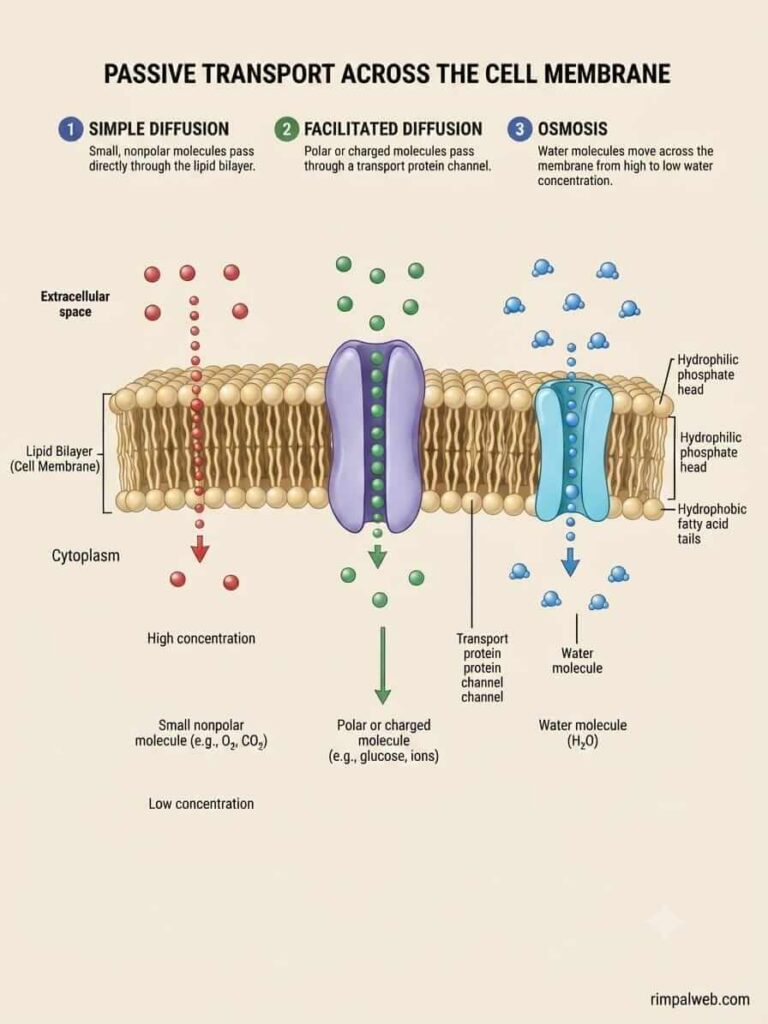
1. Passive Processes (No Energy Needed):
Simple Diffusion: Movement of molecules (like Oxygen) from high concentration to low concentration. Example: Like perfume spreading from a spray bottle across a room.
Facilitated Diffusion: Large molecules (like glucose) need a “helper” protein to pass through the membrane.
Osmosis: The movement of water through a semi-permeable membrane. This is crucial for maintaining the fluid balance in patients.
2. Active Processes (Energy Required):
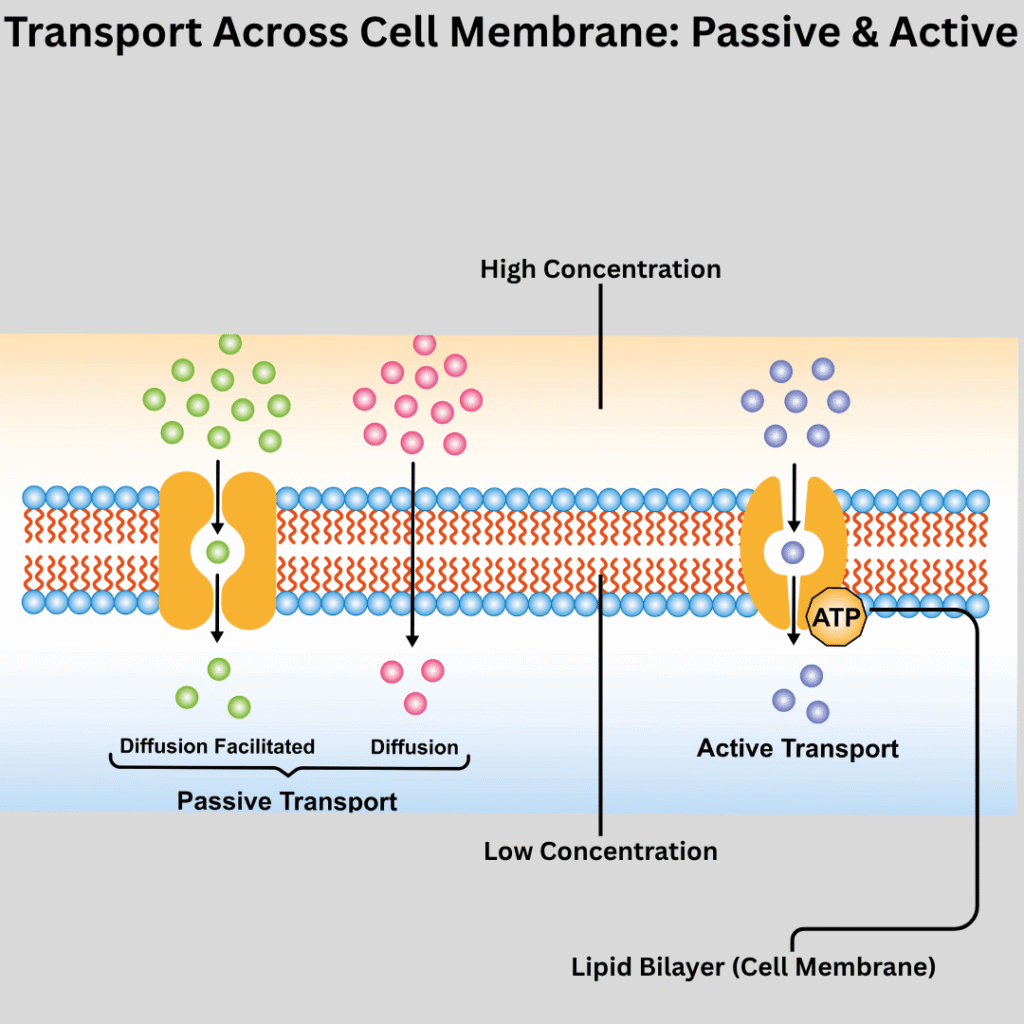
Active Transport: The cell uses ATP (energy) to move substances against the gradient. Think of pushing a ball up a hill—it takes effort (energy).
Endocytosis and Exocytosis: The cell literally engulfs large particles (phagocytosis) or spits out waste materials.
“Note: Keeping a diagram handy while learning Human Cell Structure and Function for Nursing helps in better retention.”
2. Cytoplasm: The Cellular Workspace
The cytoplasm is the gelatinous fluid inside the cell where all the “action” happens. It consists of the cytosol (the fluid part) and organelles (the working parts).
Cytosol Importance: It makes up 55% of the total cell volume and is rich in water, ions, and proteins. It is the site for glycolysis, a vital metabolic pathway for energy production.
3. Cell Organelles: The City’s Functional Departments
To truly master human cell structure and function, you must visualize how these organelles perform specialized tasks.
Ribosomes: The Protein Factories
Ribosomes are the assembly line workers. They synthesize proteins, which are essential for repairing tissues and supporting immune functions.
Endoplasmic Reticulum (ER): The Logistics Network
Rough ER: Studded with ribosomes; it is the “protein packing center.”
Smooth ER: It doesn’t have ribosomes. It focuses on lipid and steroid synthesis, such as creating hormones like estrogen and testosterone.
Mitochondria: The Powerhouse
Mitochondria are the power plants of the cell. They perform aerobic respiration to produce ATP (Adenosine Triphosphate).
Clinical Relevance: Muscle cells have many mitochondria because they require constant energy. Without mitochondria, your heart would stop beating, and your muscles would fail to contract.
Lysosomes: The Waste Disposal System
Lysosomes contain powerful hydrolytic enzymes. They are known as “suicidal bags” because they digest worn-out organelles, bacteria, and debris. They keep the “city” clean and prevent the accumulation of toxic waste.
Golgi Complex: The Packaging Center
Think of the Golgi complex as the Amazon shipping center. It receives proteins from the ER, packages them into vesicles, and ships them to wherever the body needs them.
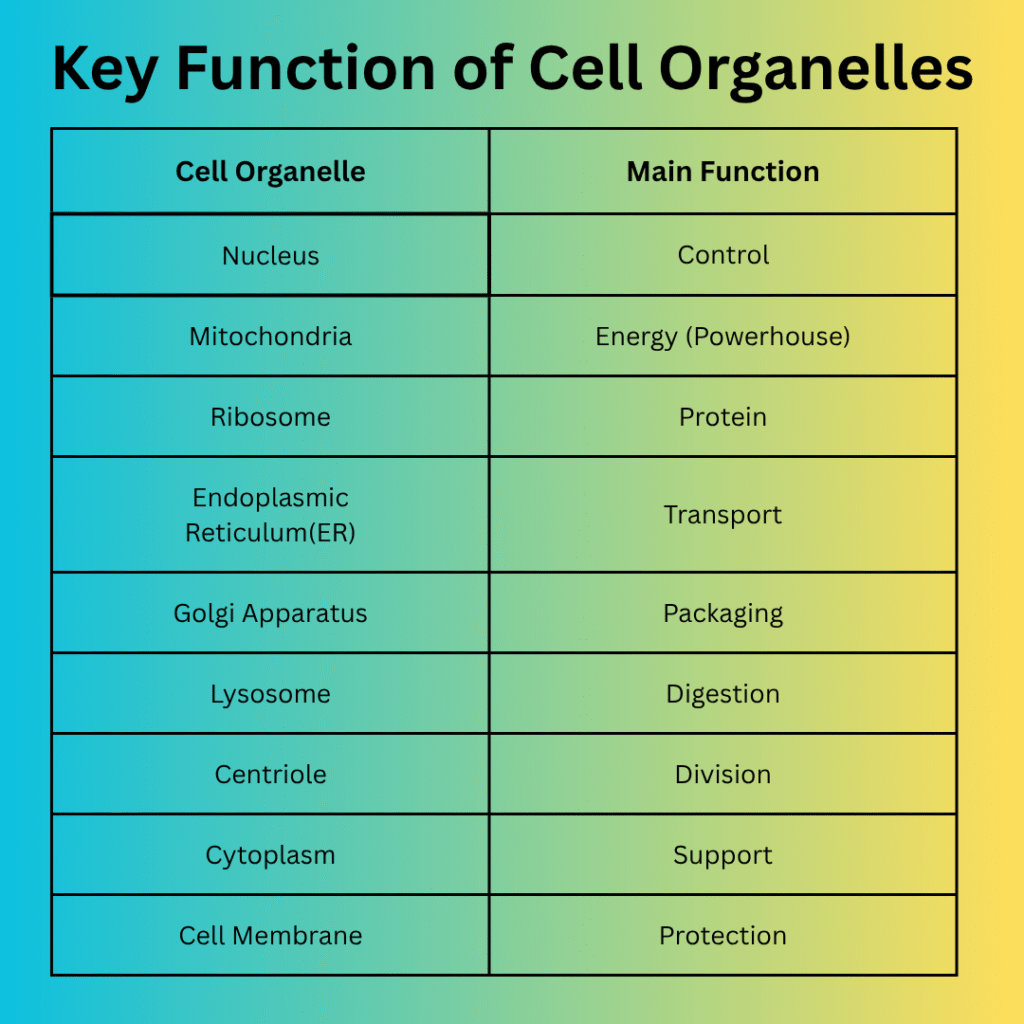
“A summary of all cellular organelles to help you understand how they work together.”
“Quick Revision Table : Cell Organelles & Functions.”
4. The Nucleus: The Central Administration
The nucleus is the boss of the cell. It houses the DNA (chromosomes), the blueprint of your entire being.
Nuclear Envelope: A double membrane that protects the DNA.
Nucleolus: A dense spot inside that manufactures ribosomes.
Genetics: With 30,000 genes and 46 chromosomes, the nucleus ensures that every cell knows exactly what its job is, whether it’s a skin cell or a neuron.
Why This Knowledge Matters for Your Nursing Career
When you study the human cell structure and function, you are not just memorizing names. You are learning why a patient becomes dehydrated (osmosis failure), why they experience muscle fatigue (mitochondrial dysfunction), or how infections spread (phagocytosis).
By keeping these structures in mind, you will become a more analytical and efficient nurse. You will look at a patient’s symptoms and instantly relate them to cellular health.
Students’ Corner: Key Doubts Cleared About Cell Biology
-
Why is understanding Human Cell Structure and Function for Nursing crucial?
A solid grasp of Human Cell Structure and Function for Nursing is essential because it forms the basis of all physiological processes. By understanding how cells operate, you can better comprehend diseases, medication actions, and patient care, which are vital for your clinical success.
-
How can students master the Human Cell Structure and Function for Nursing?
To master the Human Cell Structure and Function for Nursing, you should combine active learning methods like drawing diagrams, using flashcards for organelle functions, and consistently reviewing your textbooks. Regular practice and relating these concepts to real-life patient scenarios will make your study process much more effective.
-
Which resources are best for studying Human Cell Structure and Function for Nursing?
While there are many books, relying on standard medical-surgical nursing textbooks and high-quality diagrams is the best approach. Ensuring that your study material covers every aspect of Human Cell Structure and Function for Nursing will help you clear your exams like P.R. Yadav and excel in your medical career.
Conclusion
We hope this guide has made the complex world of the human cell structure and function easier to grasp. Remember, every major medical breakthrough starts with an understanding of these tiny, powerful structures. Keep revising, keep practicing, and don’t hesitate to refer to your diagrams while studying!
“Consistent practice of these concept is the key, which is why Human Cell Structure and Function for Nursing is a fundamental topic that every student should master.”
“To understand how cells perform their duties, you should also read our detailed guide on [6 Basic Life Processes of the Human Body].”