
Introduction: The Secret Language of Your Cells
Have you ever stopped to think about what makes you a unique human being? Your height, the color of your eyes, and even how your body fights off common illnesses—all of these traits are written in a special code. This code is hidden inside your cells, managed by two incredible molecules: DNA and RNA. Together, they form what we call nucleic acids.
When we talk about Nucleic Acid Structure and Function, we are essentially talking about the instruction manual of life itself. “In this post, we will explore this fascinating topic in very simple terms so that you can understand how your body works at the microscopic level.
When I first started studying the complex world of genetics, I was amazed to realize that the same scientific principles governing my own body are the ones being explored in modern medical laboratories across the globe.”
Just a few decades ago, we didn’t even know what the structure of life looked like. Thanks to advanced microscopes and brilliant scientists, today we are decoding life itself.
Imagine this: if we could print out your entire genetic code, it would fill thousands of books. All of this information is packed into a space so small that you need a powerful microscope to see it. That is the true wonder of the molecules we are about to study.
This guide explains Nucleic Acid Structure and Function in simple and easy English.
Getting to Know Nucleic Acids: The Basics
If you think of a cell as a factory, nucleic acids are the head office. They store, manage, and send out instructions for everything that happens inside the factory. Chemically, they are long, complex chains made up of tiny units known as nucleotides. Think of nucleotides as individual LEGO blocks; when you snap many of them together in a specific order, you get a nucleic acid. These molecules are built using five main elements: Carbon, Hydrogen, Oxygen, Nitrogen, and Phosphorus.
These building blocks (nucleotides) are the reason why life is so diverse. Just by changing the sequence of these “LEGO blocks,” nature can create anything from a blade of grass to a human being.
The Two Famous Types of Nucleic Acids
Before we dive into the details, it is important to know that there are two famous types of these essential molecules that manage everything in your body: Deoxyribonucleic Acid (DNA) and Ribonucleic Acid (RNA). Let’s look at them one by one.
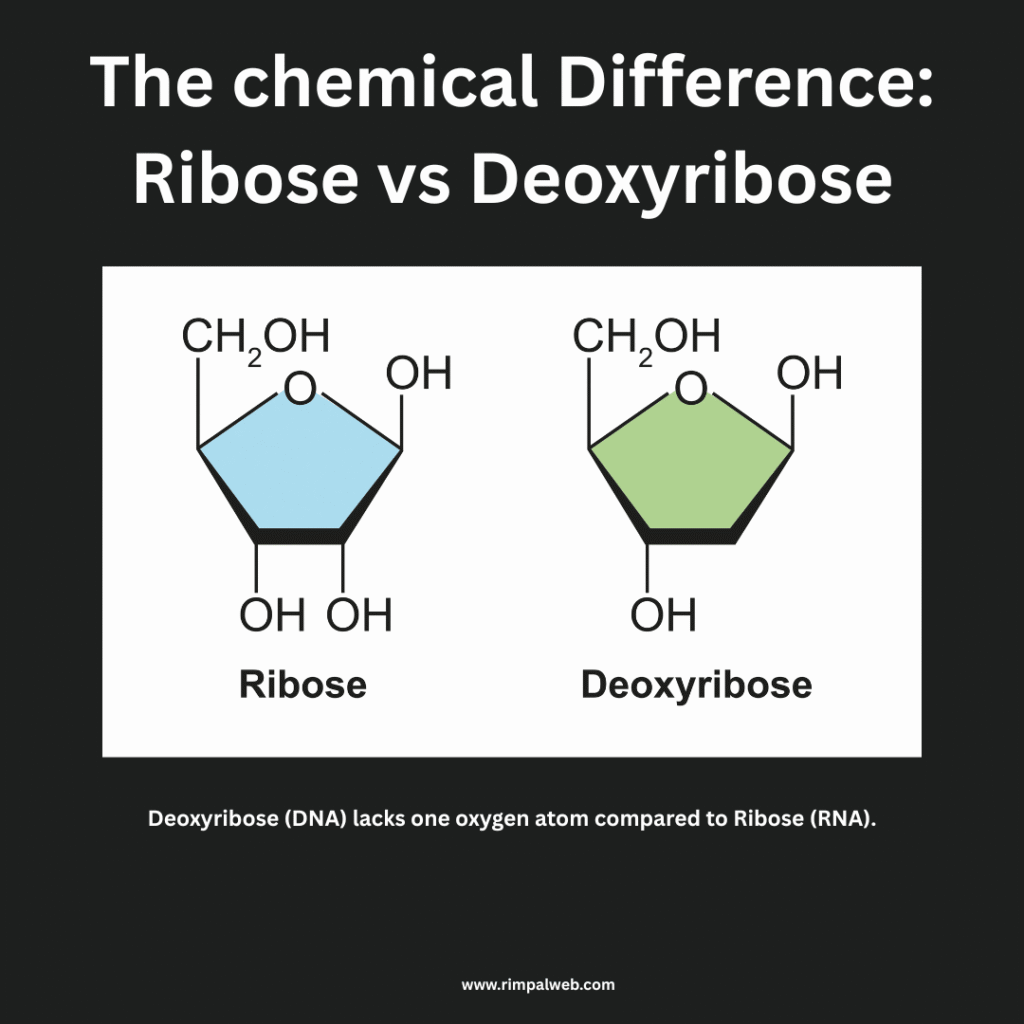
” NOTE: As you can see in the diagram, the key difference lies in the sugar backbone. DNA uses Deoxyribose (missing one oxygen atom), while RNA uses Ribose. This small change makes DNA much stable for long-term storage!”
Understanding Nucleic Acid Structure and Function becomes easier when you compare DNA and RNA side by side.
DNA vs RNA: Quick Comparison
| FEATURE | DNA | RNA |
| Full Name | Deoxyribonucleic Acid | Ribonucleic Acid |
| Sugar | Deoxyribose | Ribose |
| Strands | Double-stranded | Single-stranded |
| Nitrogen Base | Uses Thymine (T) | Uses Uracil (U) |
| Main function | Stores genetic information | Helps in protein synthesis |
| Location | Mainly in nucleus | Nucleus and Cytoplasm |
Quick Tip: DNA stores the genetic blueprint of the body, while RNA reads and uses that blueprint to make proteins. Understanding this difference between DNA and RNA is essential to understanding nucleic acid structure and function. Want to learn more? Read the detailed explanation of nucleic acids from the National Human Genome Research Institute (NHGRI).
The Powerhouse of Genetics: Deoxyribonucleic Acid (DNA)
DNA is perhaps the most famous molecule in science, and for good reason. It acts as the permanent storage for all the genetic information that makes you who you are.
Understanding the Double Helix Shape
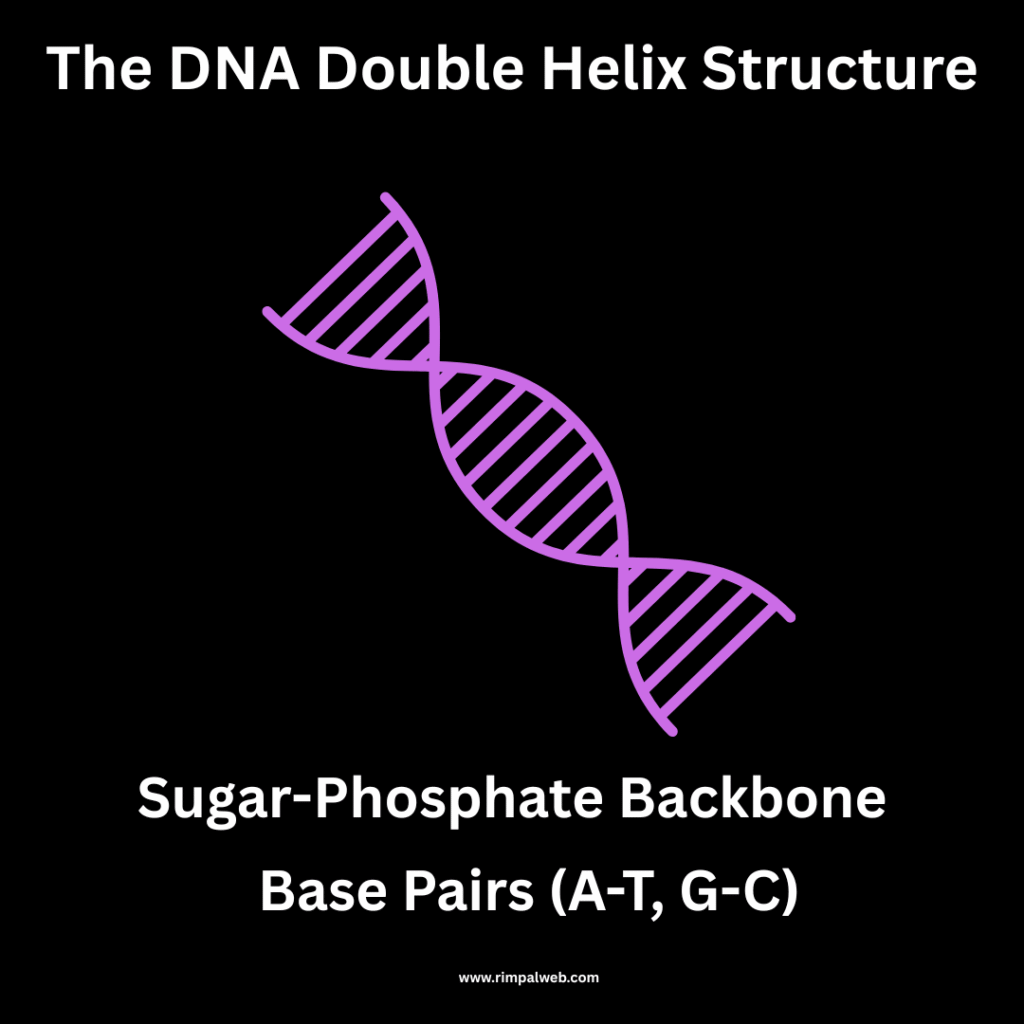
In the early 1950s, scientists Watson and Crick discovered that DNA is shaped like a twisted ladder, which we call a double helix. Imagine a ladder that has been spun around, and you have the basic idea. The “sides” of this ladder are made of sugar and phosphate, while the “rungs” are made of pairs of nitrogen bases. This double helix shape is crucial because it protects the genetic information inside, ensuring it doesn’t get damaged easily.
The Rules of Pairing (A-T and G-C)
The “rungs” don’t just connect randomly. DNA follows a strict pairing rule: Adenine (A) always pairs with Thymine (T), and Guanine (G) always pairs with Cytosine (C). This strict pairing is what makes your genetic code so reliable and accurate when your body copies it. Without this precision, mistakes in our genetic code would happen constantly, leading to serious health issues.
Biological Importance of DNA
DNA is much more than just a cool-looking structure. Its importance is massive:
It is the primary molecule of heredity, meaning it is the reason you resemble your parents.
It functions as a storage bank for your biological data.
It is the master guide that tells your cells how to create necessary proteins.
It acts as a self-repairing mechanism; when the DNA is slightly damaged, special proteins can read the code and fix the error.
DNA Fingerprinting: A Modern Miracle
Because everyone’s DNA sequence is slightly different, we can use it to identify people. This is called DNA fingerprinting. Whether it’s in a legal investigation or helping confirm a family relationship, this technique shows us how powerful our Nucleic Acid Structure and Function truly is. Imagine being able to identify a person from a single drop of blood—that is how specific our DNA is!
The Future: Genetic Engineering
Beyond just identifying individuals, our knowledge of Nucleic Acid Structure and Function has led to the incredible field of genetic engineering. Scientists can now carefully “edit” the DNA code to solve problems that were once thought impossible.
For example, by changing specific parts of the genetic code, researchers are finding ways to make crops more resistant to diseases or even developing treatments for genetic disorders that are passed down through families.
This technology is like using a word processor to correct a typo in a massive book; by fixing a single “typo” in the DNA, we can prevent a disease before it even starts. It is one of the most promising areas of modern science that will likely shape the future of healthcare.
Ribonucleic Acid (RNA): The Cell’s Messenger
If RNA is often described as the “bridge” between your genetic code and your physical body. Without RNA, the instructions written in your DNA would remain locked away, never being used to actually build anything. Think of RNA as a highly skilled worker that goes into the “vault” of the nucleus, reads the master blueprint (DNA), and then carries that information out into the busy construction zones of the cell.
By translating the genetic code into actionable instructions, RNA makes sure that every single protein your body needs—whether it’s for building strong muscles, producing digestive enzymes, or maintaining your skin—is created exactly when and where it is needed.
How RNA Differs from DNA
RNA usually stays in a single-strand form, unlike the double-stranded DNA. It also uses a different type of sugar (ribose) and swaps the base Thymine for Uracil. These small changes make RNA more flexible for moving around the cell to help build proteins.
The Three Essential Types of RNA
To perform its role, RNA comes in three main versions, like a well-organized factory team:
1.Messenger RNA (mRNA): This acts as the direct messenger. It copies the instructions from the DNA in the nucleus and carries them out to the cytoplasm, acting like a courier service.
2.Transfer RNA (tRNA): Think of this as a delivery truck. It finds the specific building materials (amino acids) needed to build a protein and brings them to the ribosome.
3.Ribosomal RNA (rRNA): This lives inside the ribosome, which is the actual “construction site” where proteins are put together. Without these machines, our cells could not produce the proteins needed for life.
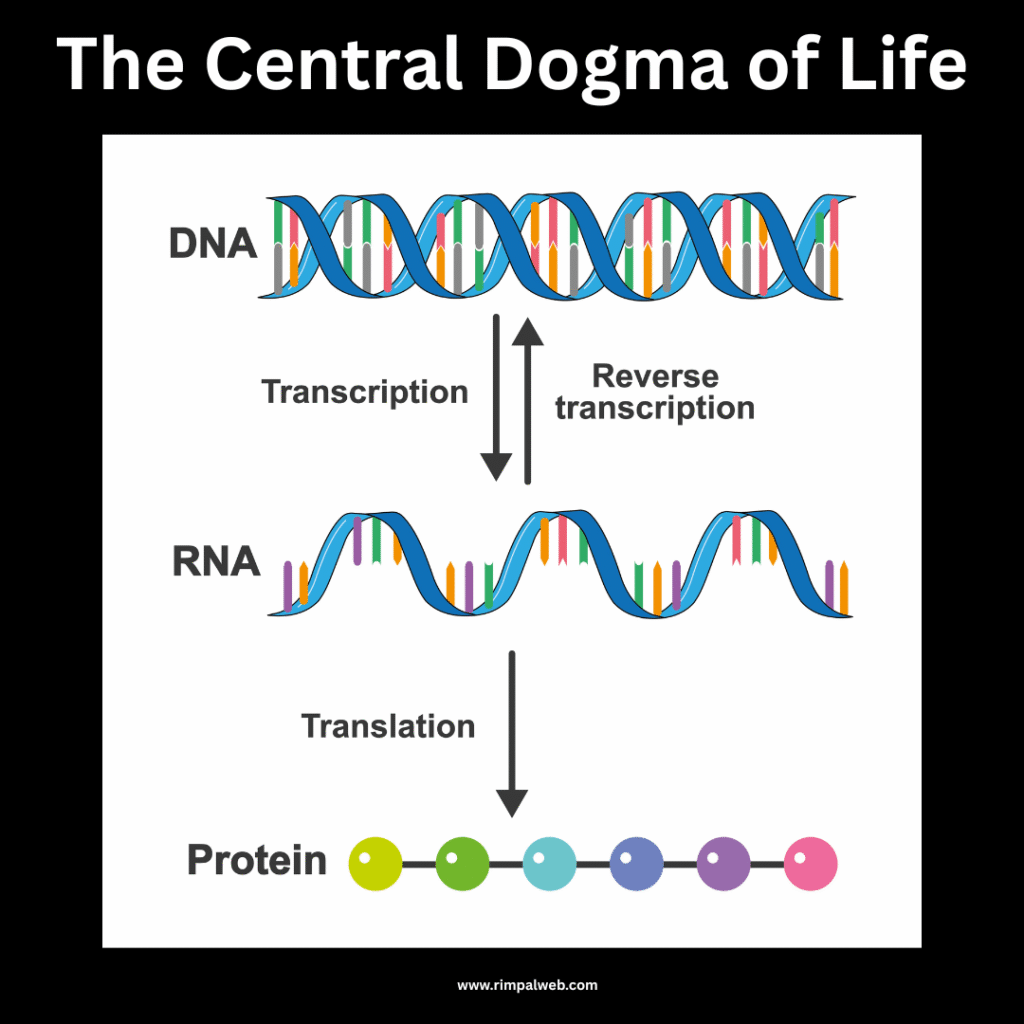
“Figure: The Central Dogma-Visualizing how mRNA, tRNA, and rRNA work together to turn genetic code into proteins.”
Frequently Asked Questions (FAQ)
Why are these molecules called “Nucleic Acids”?
They got the name because they were first discovered by scientists inside the nucleus of living cells. Understanding Nucleic Acid Structure and Function role in storing genetic information.
Can DNA change or mutate?
Yes, and when it does, it can sometimes create abnormal cells, which is why your body has complex systems to monitor and repair its DNA. Changes in Nucleic Acid Structure and Function can sometimes affect how cells work.
Is protein synthesis really that important?
Absolutely! Proteins are the “bricks” of your body; they make up your skin, your muscles, and your enzymes, which keep your body running.
Why is DNA double-stranded?
DNA is double-stranded because this structure makes it more stable and helps protect genetic information. This feature is an important part of Nucleic Acid Structure and Function.
Where is DNA found in the human body?
DNA is found mainly in the nucleus of cells. It carries the genetic information needed for growth and development.
Why is RNA important?
RNA is important because it helps make proteins by using the genetic information stored in DNA.
Conclusion: The Foundation of Life
In summary, exploring the Nucleic Acid Structure and Function reveals the elegant design behind our existence. From the stable, double-helix architecture of DNA to the active, versatile role of RNA, these molecules work in perfect harmony to keep our biological systems functioning. By storing our genetic history and managing the constant creation of proteins, they act as the silent architects of the human body.
As science continues to advance, our understanding of these incredible molecules will only open more doors to medical breakthroughs, personalized medicine, and a deeper appreciation of the complexity of life itself. In the future, we may be able to cure genetic diseases simply by “editing” these codes.
Whether you are a student or just curious, remember that your body is telling its own amazing story every single second, one nucleotide at a time. The next time you look in the mirror, remember: you are looking at the result of a perfectly written genetic code!
If you want to understand where nucleic acids function inside the body, read our Human Cell Structure and Function guide.