
Introduction
Hello nursing students! During my GNM nursing days, when I first opened the Anatomy and Physiology textbook, this topic seemed a bit theoretical and dry. But as I cleared my exams and progressed in my career, I realized that mastering the 6 basic life processes is the most fundamental step you will ever learn.
Every single living organism on Earth performs certain basic functions to maintain life. In trusted medical books like PR Yadav, these are classified as the core functions of the human system. In simple words, these 6 basic life processes are the essential biological functions that differentiate a living human body from a non-living object like a stone, a hospital bed, or a chair.
In this blog post, I will break down this important topic into very simple, easy-to-understand English with practical clinical examples so you don’t have to cram the definitions before your exams!
What are the 6 Basic Life Processes?
Our human body is a beautiful creation made up of billions of microscopic cells. To keep these cells alive and to ensure that the entire body functions smoothly, our system performs continuous biological operations.
When you study human anatomy, you will find that these 6 basic life processes operate at every level-from a single cell to complex organ systems.
Important Clinical Note: According to human physiology, if even one of these 6 basic life processes stops working properly, it leads to cellular damage, tissue death, and ultimately, the clinical death of the entire human body.
Let us discuss each of these six essential life processes in detail:
1.Metabolism-The Chemical Factory of the body
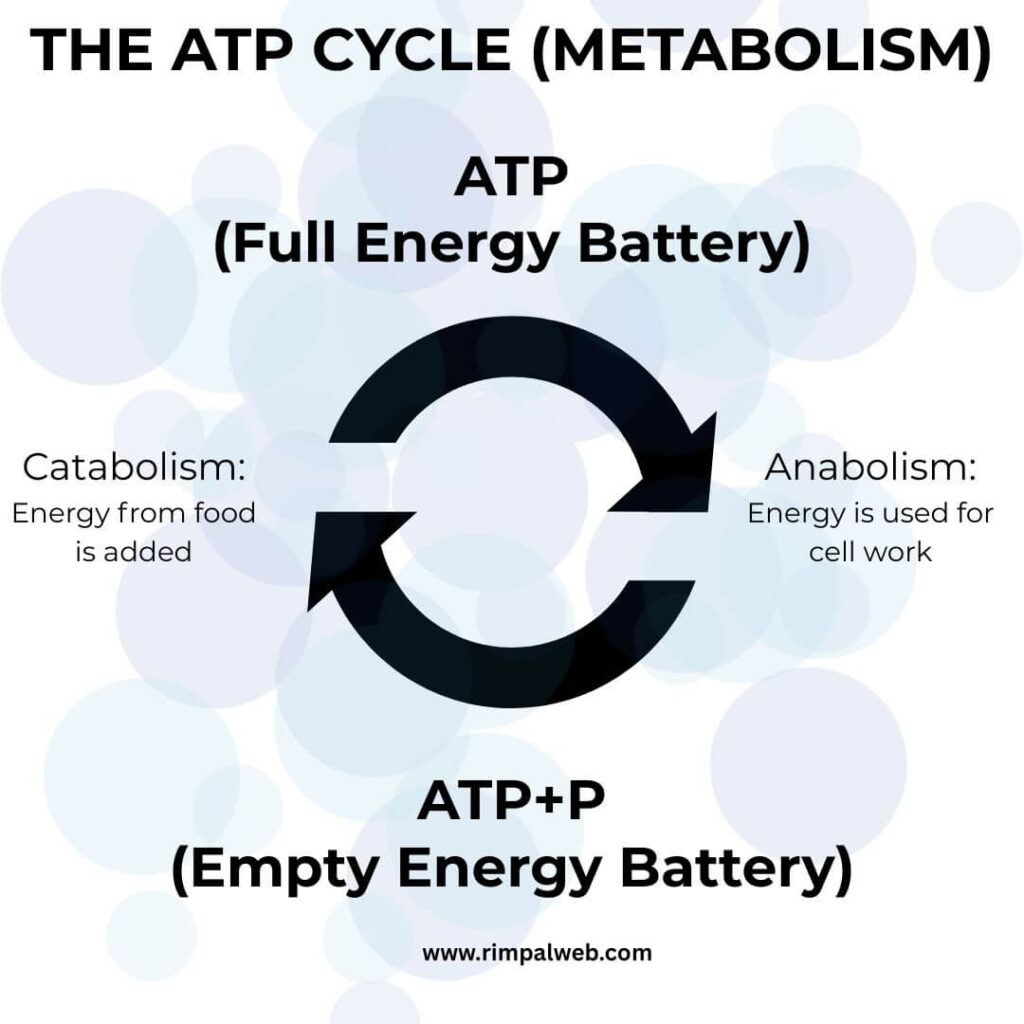
Metabolism is the absolute foundation of our physical life and the first of the 6 basic life processes. I always like to say that our body works like a massive chemical factory twenty-four hours a day. Even when you are deep asleep after a long hospital shift, thousands of chemical reactions are continuously taking place inside your cells to keep you alive.
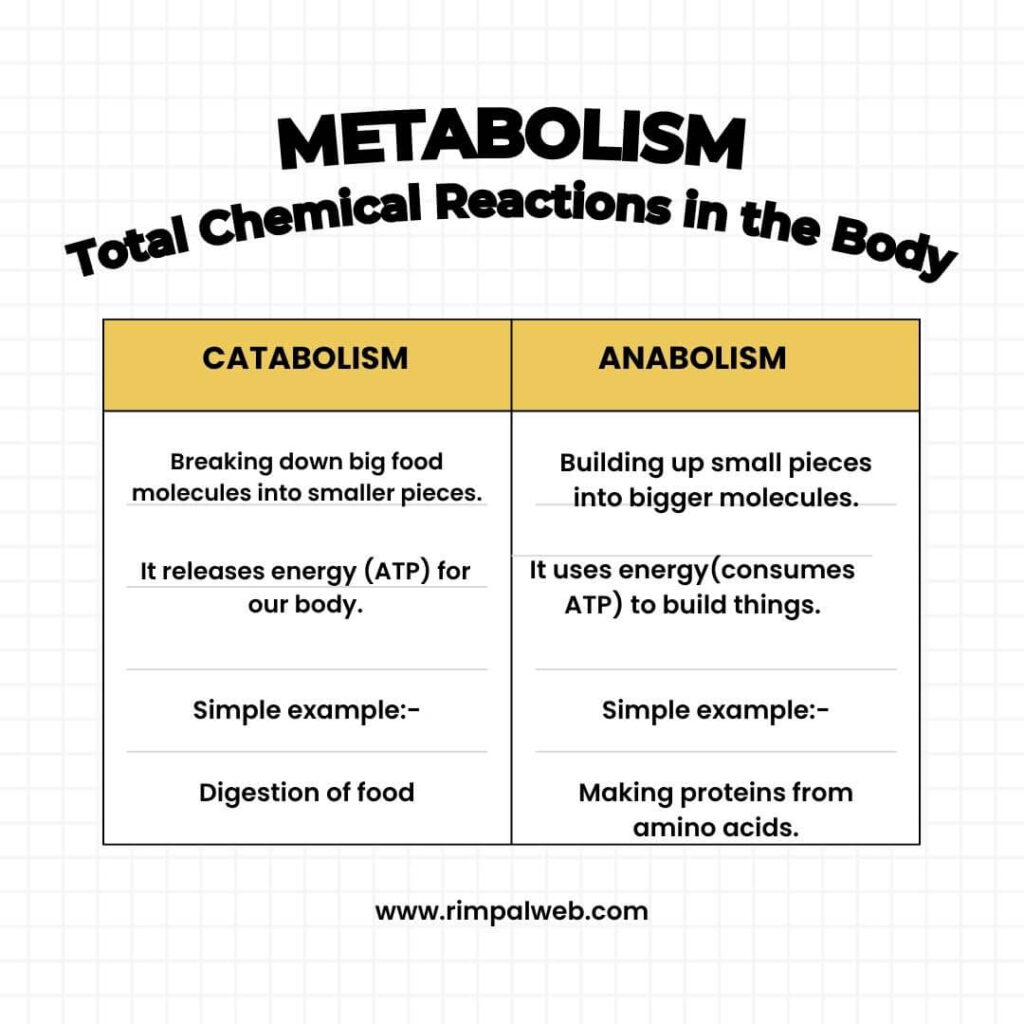
Definition: “Metabolism is the sum of all the chemical processes and reactions that occur within a living human body.”
To make this concept easy for your nursing university exams, remember that metabolism is divided into two major phases:
A) Catabolism (The Breaking Down Phase)
In this phase, the body breaks down large and complex chemical molecules into smaller, simpler ones.
Easy Example: When you eat food, your digestive system breaks down complex proteins into simple amino acids. This breaking-down process releases Energy (ATP), which our body uses to function.
B) Anabolism (The Building Up Phase)
This is the exact opposite of catabolism. In this phase, the body uses those simple, small molecules to build large and tissuses.
Easy Example: The body takes the simple amino acids obtained from catabolism and combines them to build new muscle fibers or repair damaged skin cells. This building process consumes energy.
My GNM Secret Exam Tip: Students often get confused between Anabolism and Catabolism in the exam hall. Just use the simple trick that helped me during my college days: Remember ‘C’ for ‘Cut’ or Break (Catabolism) and ‘A’ for ‘Add’ or Build (Anabolism)!
2. Responsiveness
Responsiveness is our body’s natural security alarm system and a critical part of the 6 basic life processes. It is defined as the “Ability to detect changes in the internal or external environment and respond to those changes.” Any change that triggers a reaction is called a stimulus.
External Stimulus Example: If your hand accidentally touches a very hot cup of tea or a sharp needle while handling medical equipment, your nerve cells instantly detect this dangerous change. Your brain immediately signals your muscles to pull your hand away (response) to prevent injury.
Internal Stimulus Example: When you run fast climb up the stairs, or face a stressful situation, your body cells require more oxygen. Your brain detects this internal drop in oxygen levels and immediately increases your heart rate and breathing rate to pump more oxygenated blood to your tissues.
3. Movements
In human anatomy and physiology, Movement does not just mean walking from one ward to another or running. It includes the motion of the entire body, the movement of internal organs, the shifting of single cells, and even the motion of tiny structures inside the cells.
Organ Level Movement: After you swallow food, the smooth muscles of your stomach muscles of your stomach and intestines contract and relax continuously in a wave-like motion called Peristalsis. This internal movement pushes the food forward for proper digestion.
Cellular Level Movement: When harmful bacteria or viruses attack your body, white blood cells (WBCs) move out of the blood capillaries and travel through tissues to reach the site of infection so they can destroy the germs.
4. Growth
Growth is the visible increase in body size over time, such as a small infant developing into an adult. According to medical physiology, this growth happens in two distinct ways:
1. Increase in Cell Size: The existing cells of the body expand and grow larger in volume.
2. Increase in Number of Cells: Cells divide through the process of cell division to create new cells, leading to tissue expansion.
Additionally, growth can also mean an increase in the extracellular material between cells, such as bone matrix getting mineralized and dense as a person grows older.
5. Differentiation
Differentiation is fascinating and unique biological process among the 6 basic life processes. It is the process by which unspecialized cells (cells that do not have a specific job yet) develop into highly specialized cells with a specific structure, shape and function.
How it works: All specialized cells in our body originate from simple precursor cells known as Stem Cells.
Easy Example: Inside the bone marrow, unspecialized stem cells undergo differentiation to transform into completely different types of blood cells. Some become oxygen-carrying Red Blood Cells (RBCs), some become infection-fighting White Blood Cells (WBCs), and other turn into clot-forming Platelets. Each type ends up with a totally unique shape and a different job.
6. Reproduction
To maintain the continuity of life, Reproduction is absolutely essential. From a nursing notes perspective, you should always explain reproduction at two different levels:
1. Cellular Level: This refers to the formation of new cells for tissue growth, repair, or replacement. For instance, when you get a cut or scratch on your skin, nearby cells reproduce to form new skin layers and heal the wound.
2. Organismal level: This refers to the production of a new individual through the fertilization of an egg cell by a sperm cell, ensuring that the human species continues to survive across generations.
Clinical Significance: What Happens if These Processes Fail?
As a nursing student or medical professional, understanding the clinical importance of these six processes is highly vital. As long as these six activities work together in perfect harmony, the body maintains a stable internal environment called Homeostasis, and the patient remains healthy.
If any of these processes fail or get interrupted due to a severe injury or disease (such as a dangerous drop in metabolism or loss of cellular responsiveness), it first necrosis (death), and ultimately results in the clinical death of the entire organism.
Conclusion & Exam Tips
Understanding the 6 basic life processes is the key to unlocking the initial chapters of Anatomy and Physiology. To score maximum marks in your university exams, always start your answer by drawing a clean flowchart listing these six terms just like I explained above. Follow it up by explaining the dual phases of metabolism using your diagram. This professional presentation style will easily help you secure top grades!